Staunton Style
Staunton style is a generic term for tournament chess sets, more or less closely modeled on the pattern pioneered by John Jaques and Nathaniel Cooke from 1849 onwards. The pattern has been interpreted in different ways by chess piece manufacturers all over the world - and has tolled the bell for other patterns like Regency, Austrian, Russian, Czech, St. George or other styles in chess piece design.
British
Gray's

|
Jaques
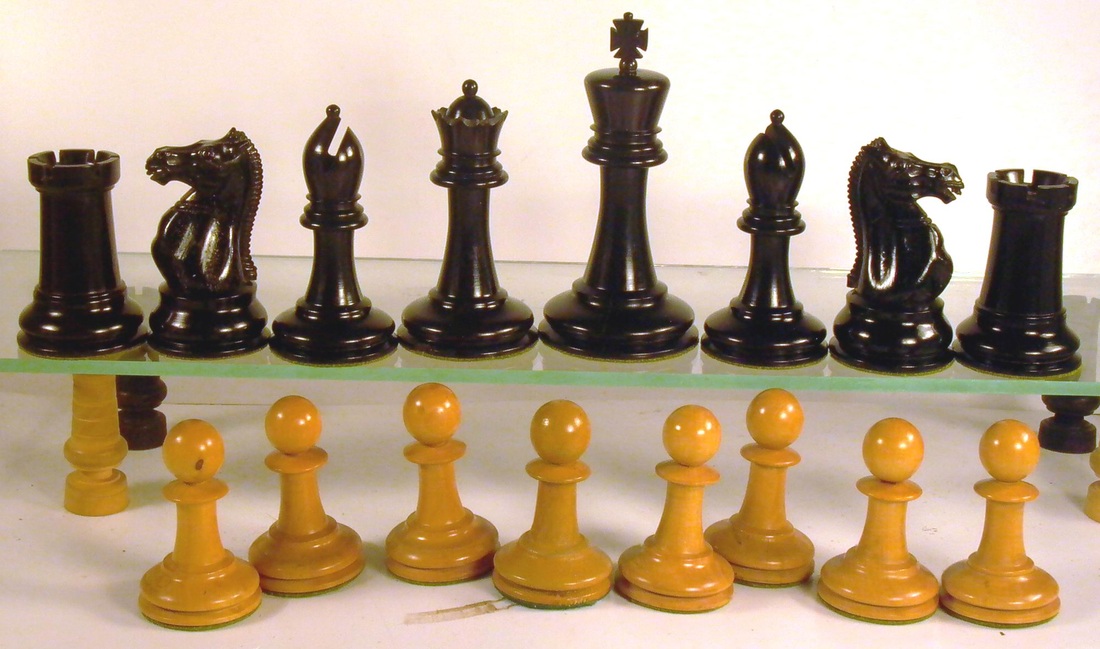
Staunton set by the famous games manufacturer Jaques, sensibly the "Hartston" variation from about 1890-1900 (acc. to the Camaratta classification) , king at 90 mm (3.75 "), heavily weighted. "Jaques London" on both king's bases on red. No box, one pawn each side replaced, white kings cross damaged. Superb set all the same.....
|
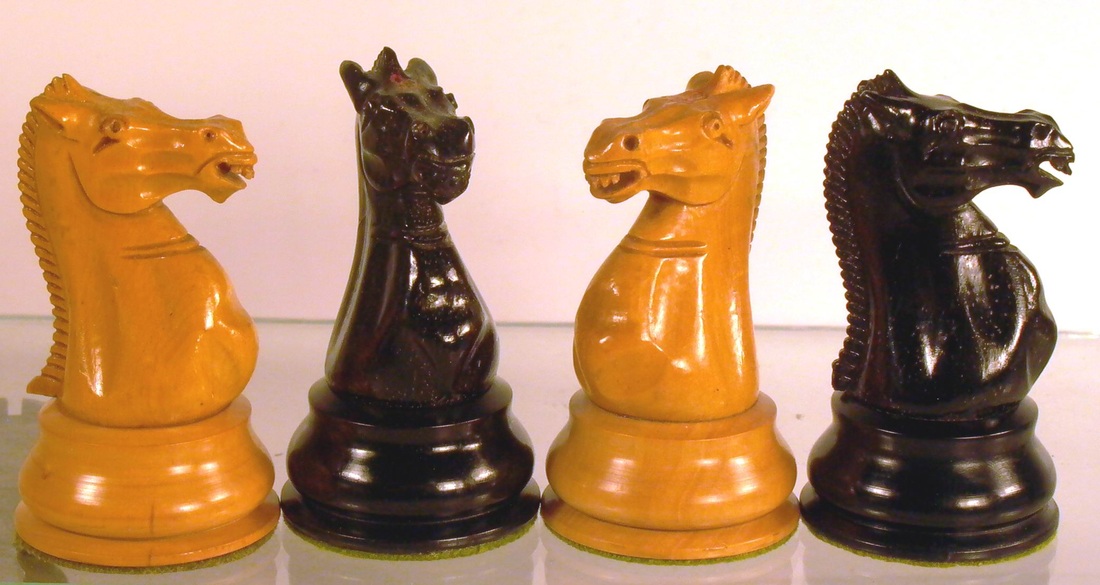
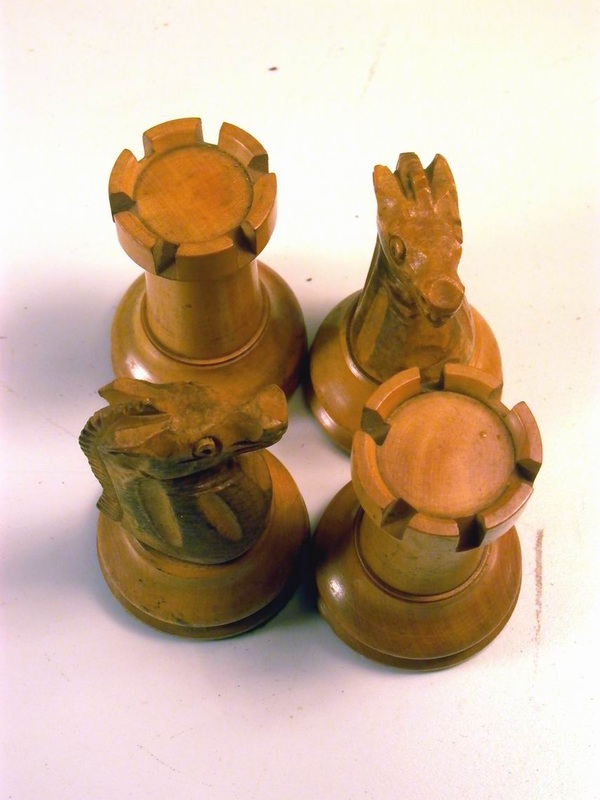
Jaques Mystique
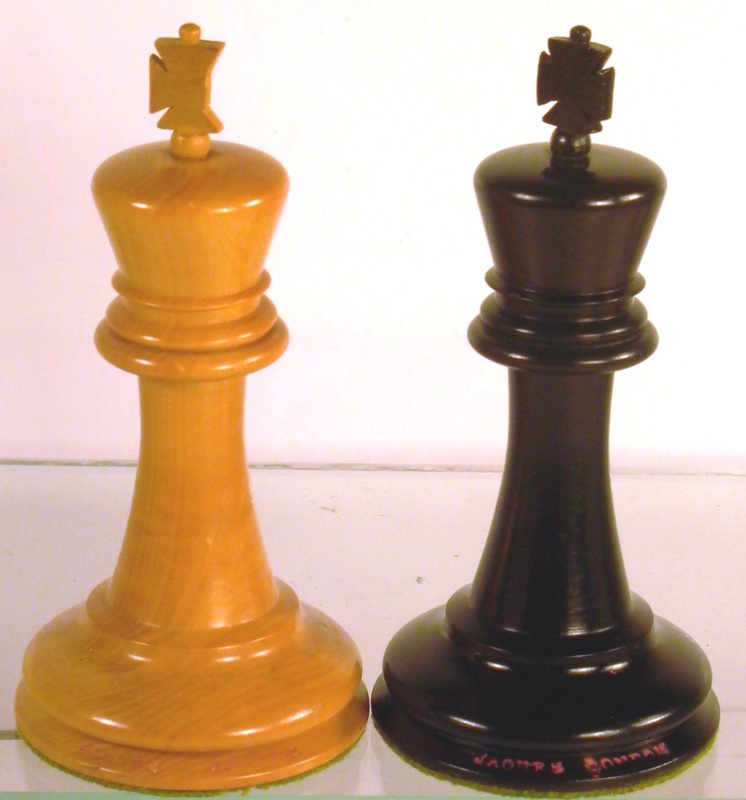
There is something inherently satisfying in the wide-flared bases of these chessmen, the very heavy weighting, the dry click of the pieces as You handle them .... this set is from the "Silver" period of Jaques chessmen - according to Jaques authority Alan Fersht quality petered off after 1880.
|
|
  |
Anonymous chessmen
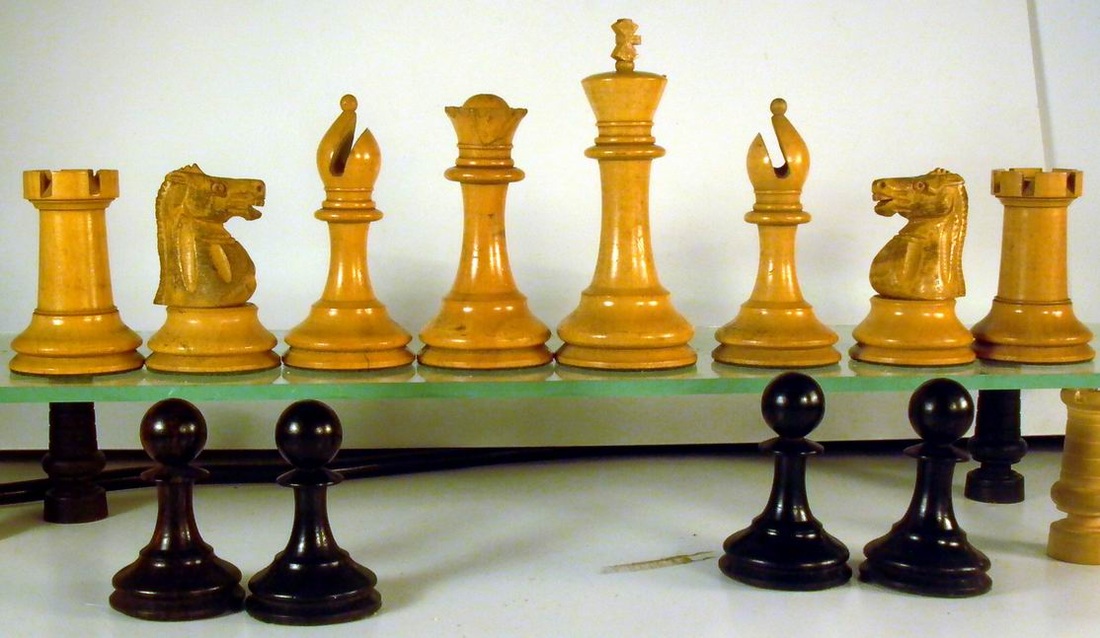
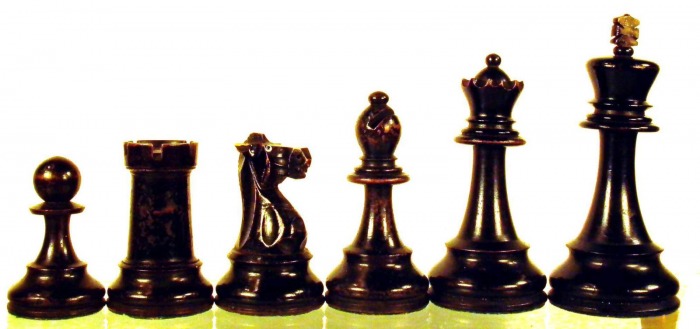
British Staunton style set , end 19th/beginning 20th C, king 90 mm,
heavily weighted, black side in ebony wood (breaks!). Who by? - not Ayres, it seems.....
|
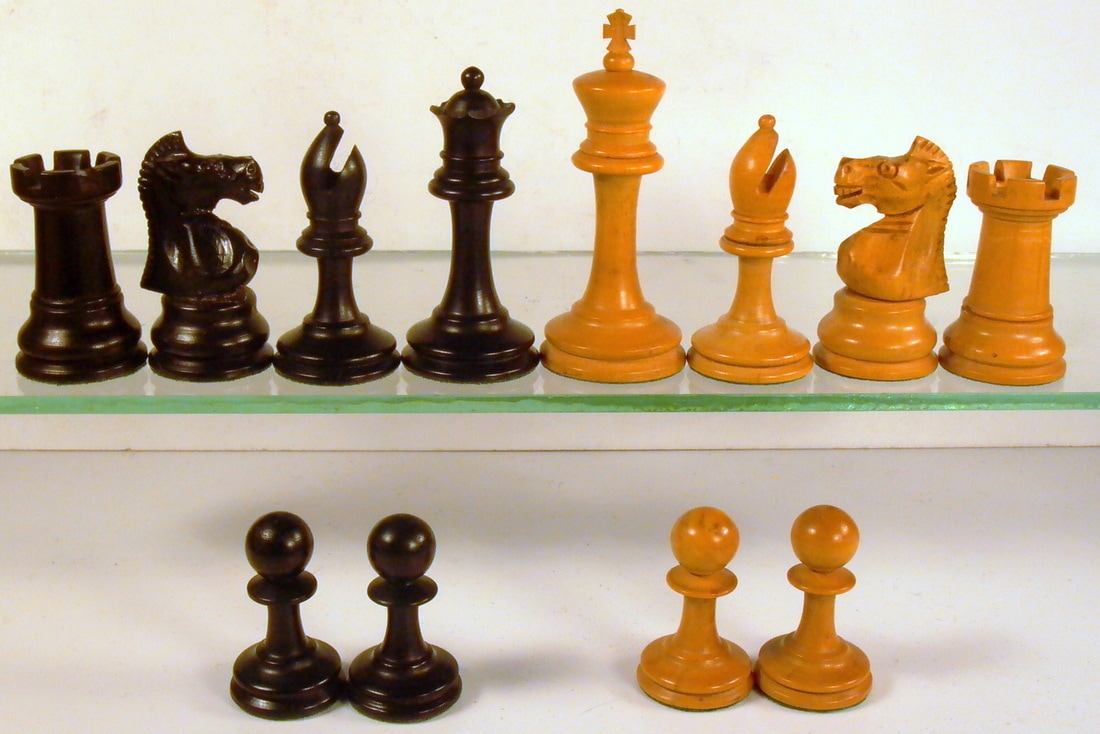
British tournament set
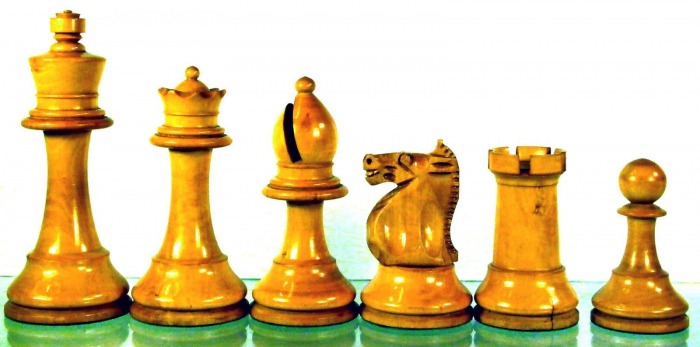
A large (king 100 mm/4 ") boxwood set of obviously british origin, heavily weighted, with some distinctive features: |
 |
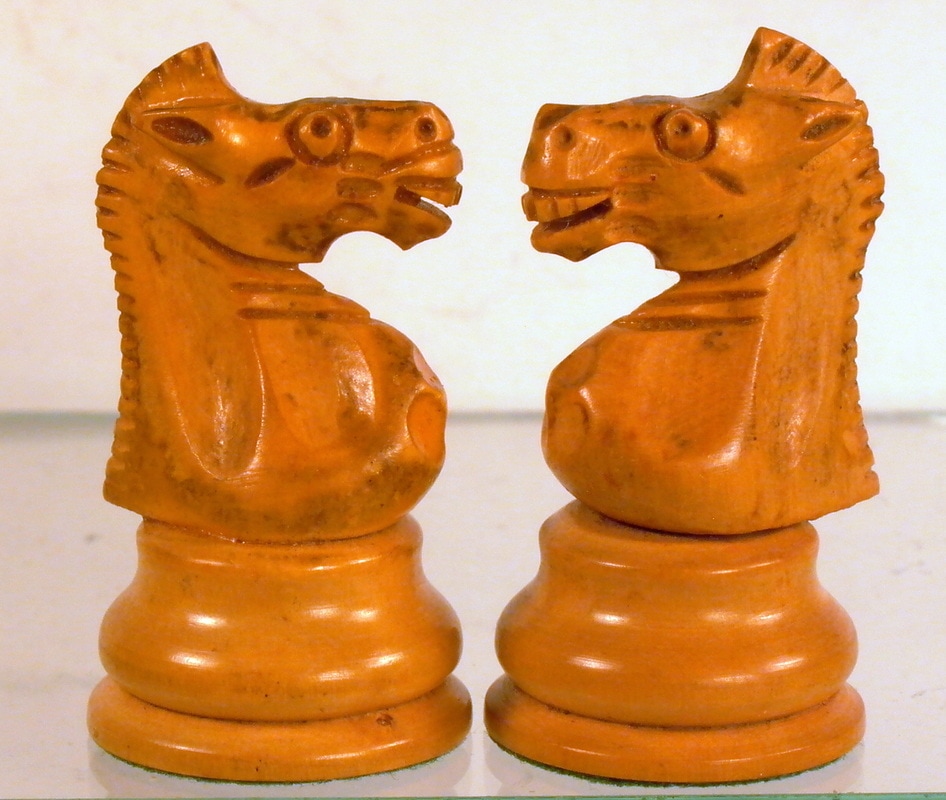
British Staunton with glass-eyed knights
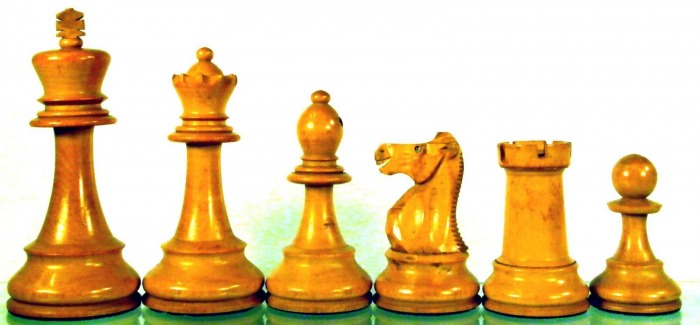
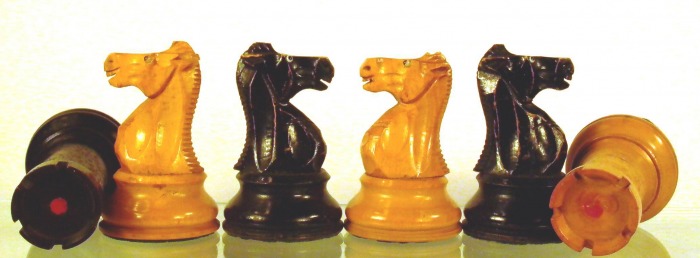
Large (king 105 mm - 4 1/4 ") tournament set in a british made felted box with lock. Heavily weighted, lovely finish on the boxwood - and glass eyed knights - barely visible on the 3.picture. Red marks on one knight and rook each side. Feels like quality - but with glass eyes probably hails from the 1930ies.... |
  |
Bulbtop

British playing set, bulbous king top, fruit wood or boxwood, no felting , 19th C, slightly concave bases, patina galore. The black pieces are ebony - some breaks! - except the knight heads! Kings stand 86 mm (ca. 3 1/2 "). |
 |
Old English
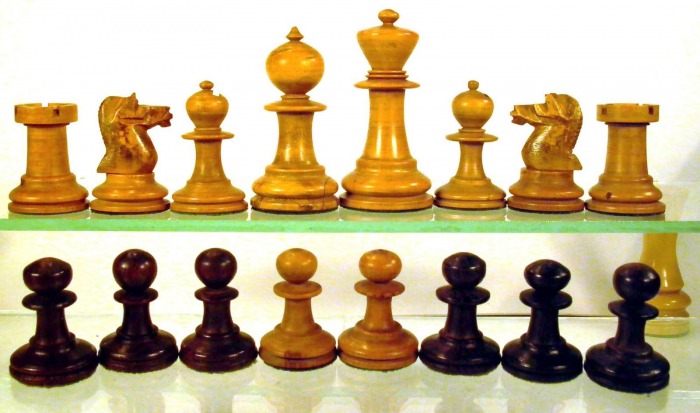
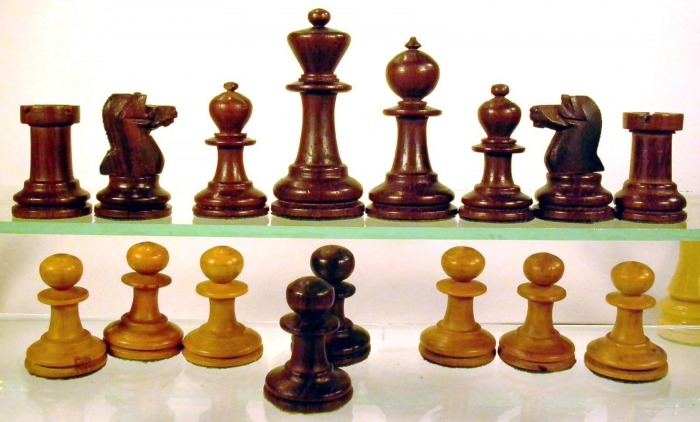
Fruitwood (pear?)/rosewood, 19th C, kings 67 mm, in between St. George and Staunton style, contained in an old Pascall's sweets tin with the proviso "Sweets make Your life sweeter". How true! |
 |
Boxwood/ebony set
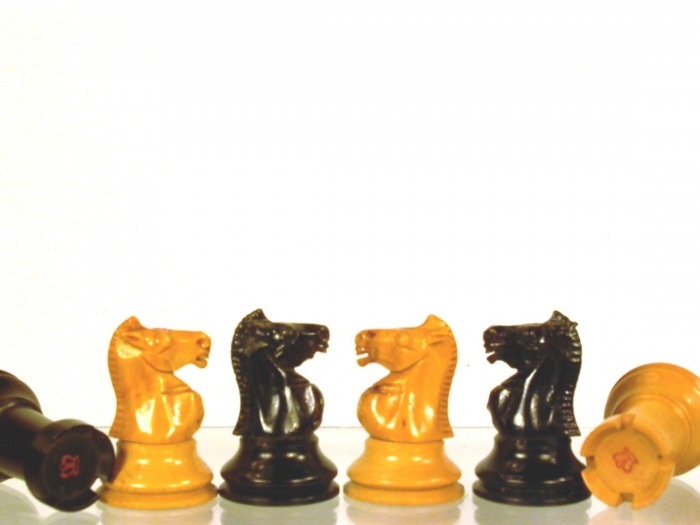
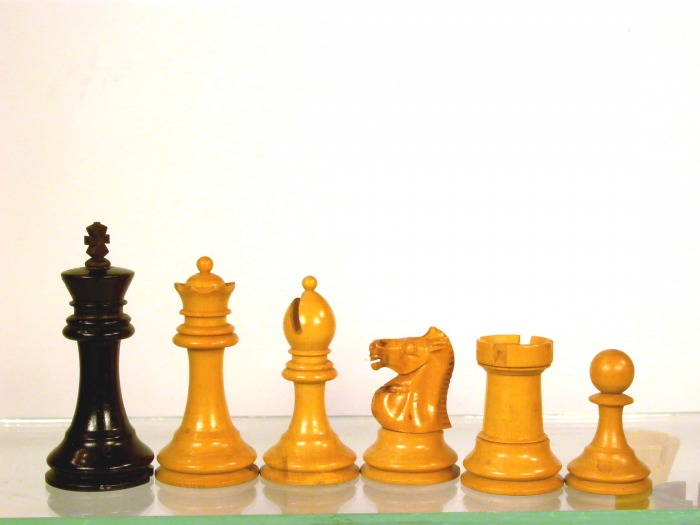
Very small set (king 63 mm - 2 1/2 "), in boxwood and ebony, neatly finished. Distinctly printed red crowns on one rook and knight each side - very fine knights head - it might be a an Ayres or Mudie set . Ebony shown through minor break - "dropped" jaw of one knight - no felt. |
 |
"Melange" Set
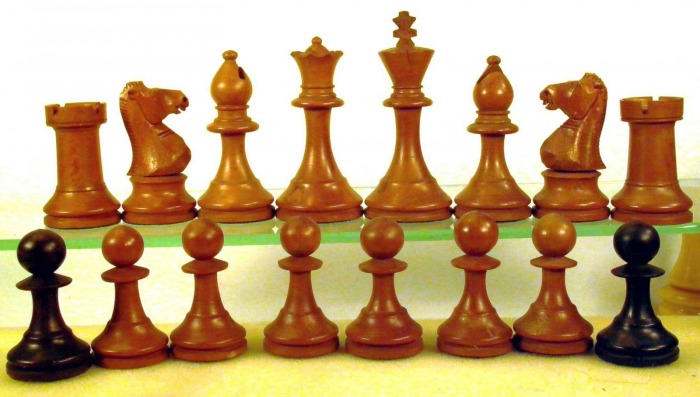
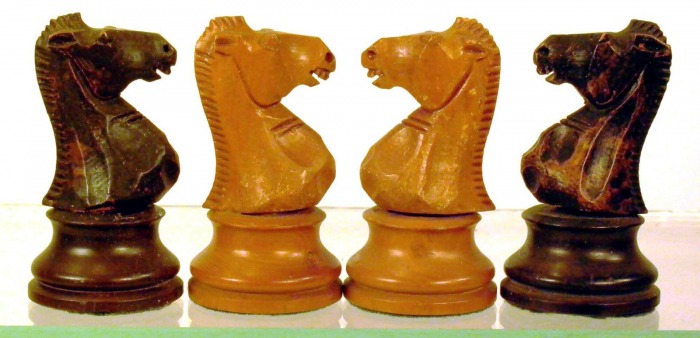
Fruit wood set - brown as a melange coffee, this set is either british with french elements, or french masquerading as british via the St. George's Cross! Not weighted, partly felted (moth-eaten), king stand 76 mm. Knights have a very toothy appearance.... who made these chessmen? |
  |
German
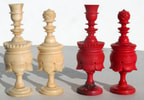
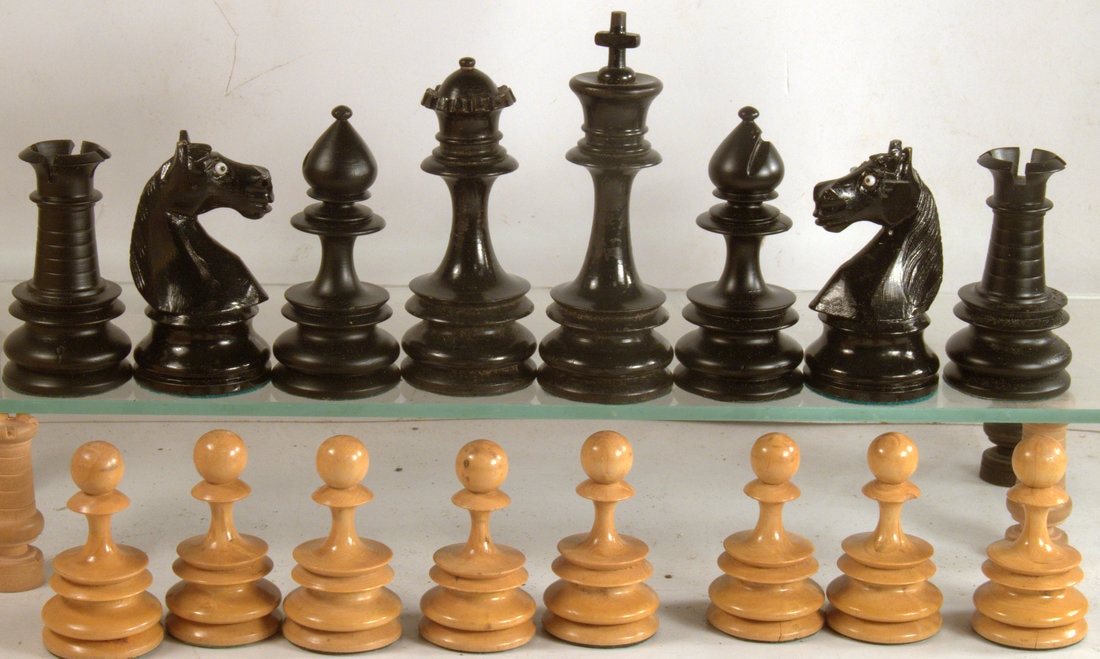
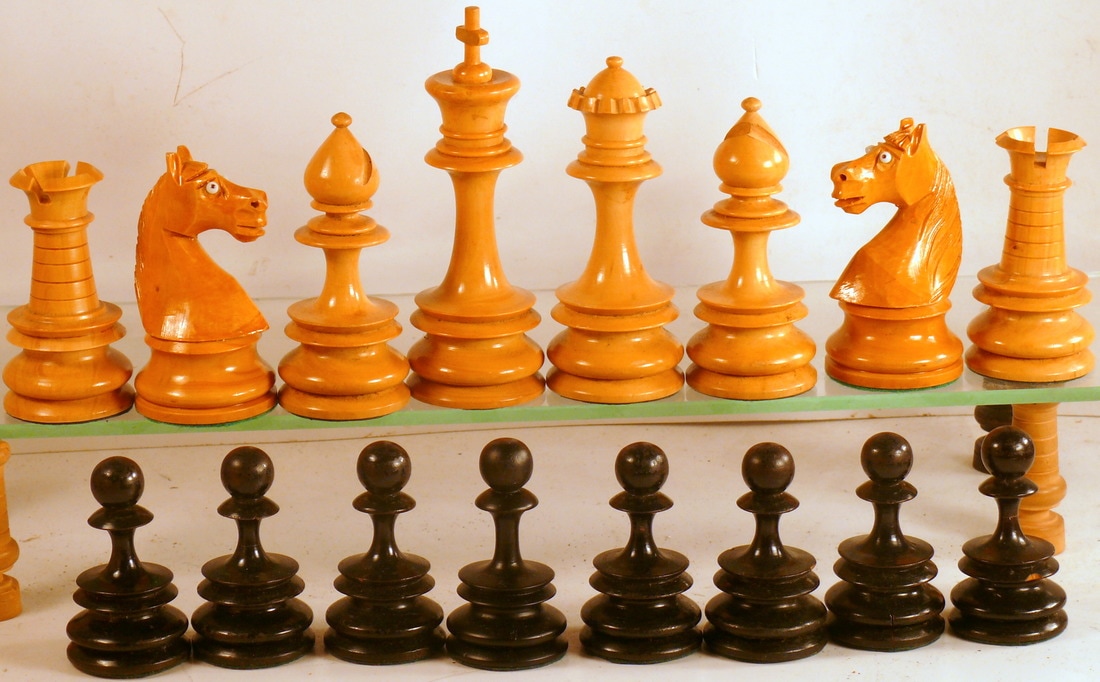
Ornate Stauntons
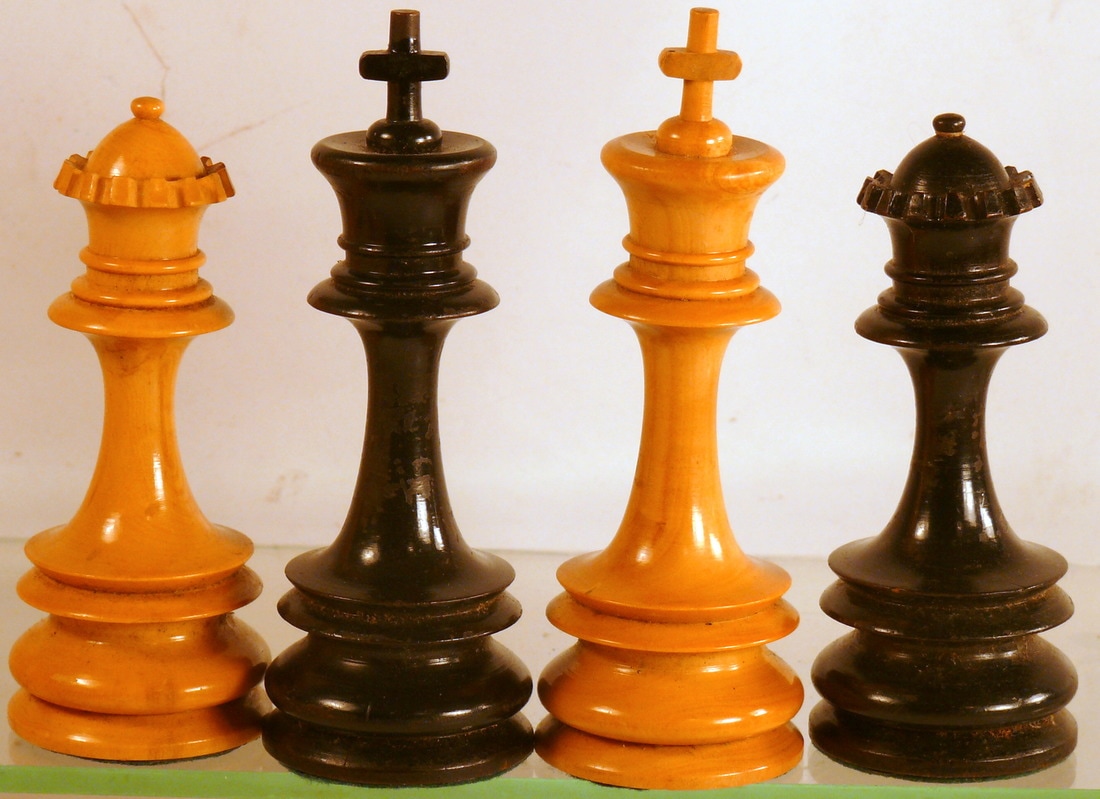
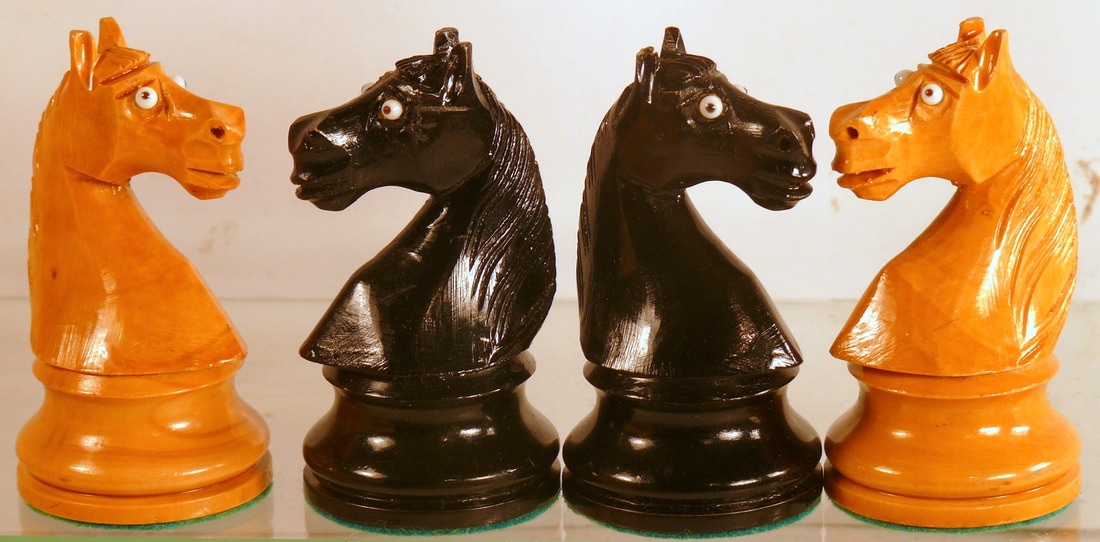
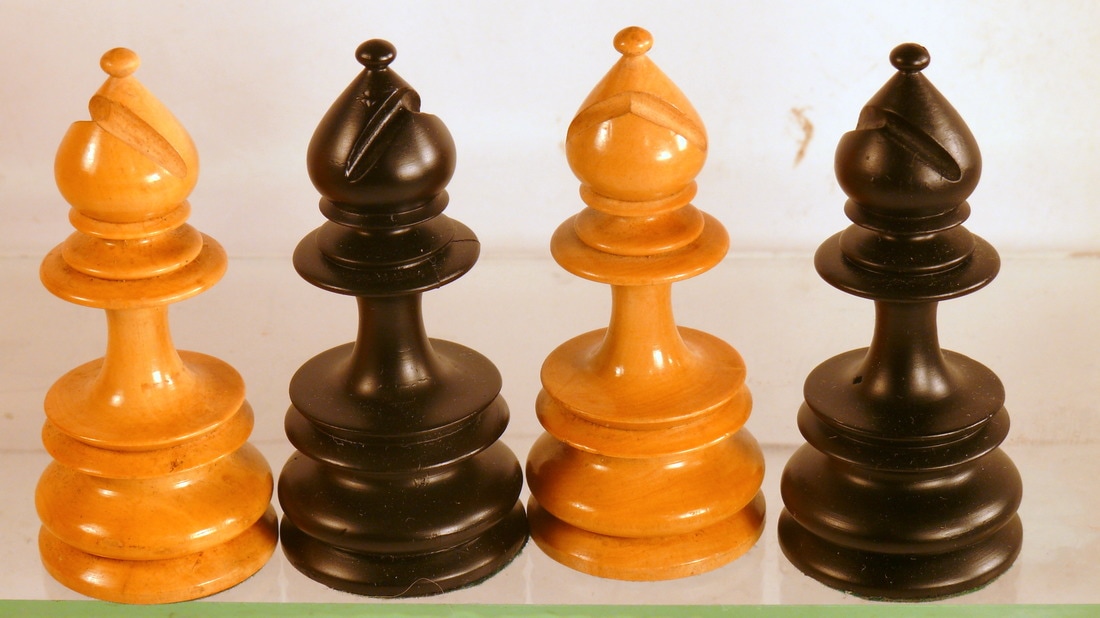
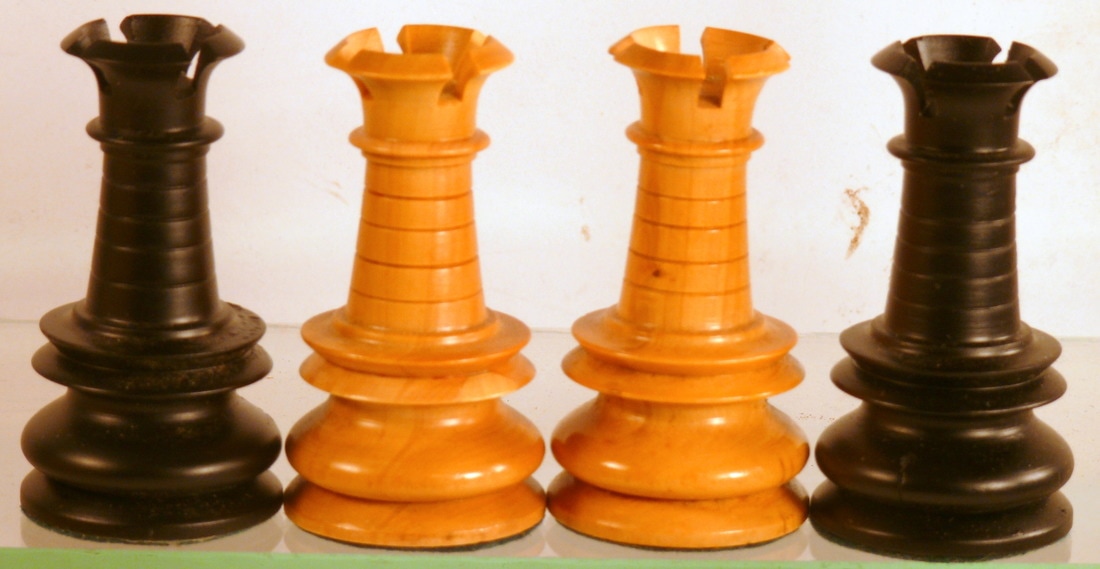
|
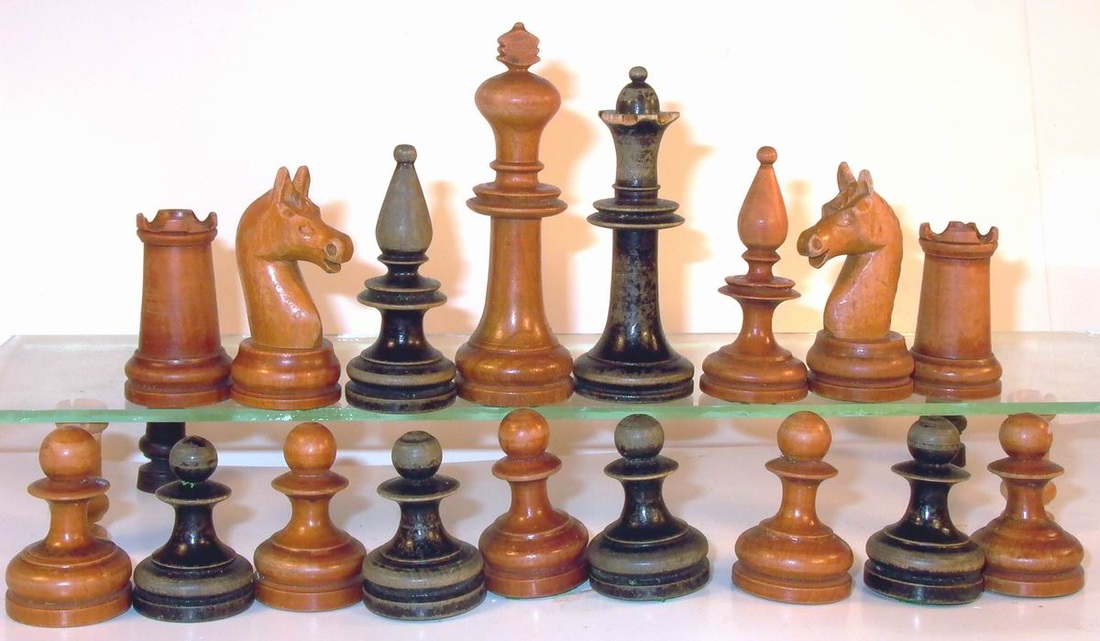
Onion Tops

Spanking exemplar of an older german Stauntons I like to term as "onion tops". Solid pieces, a grippy knight, but not too hot on stability - kings stands 12 cm high.
|
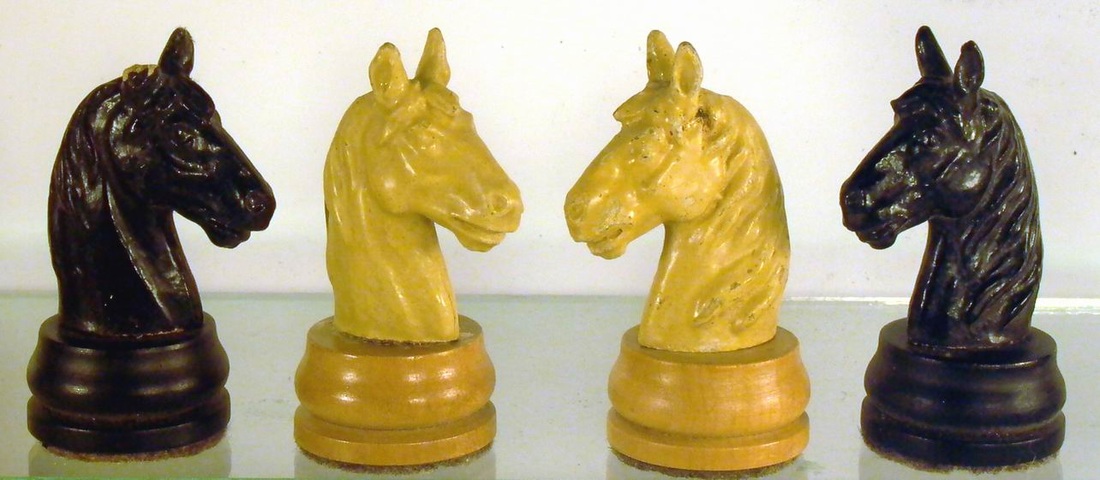
Papier Maché

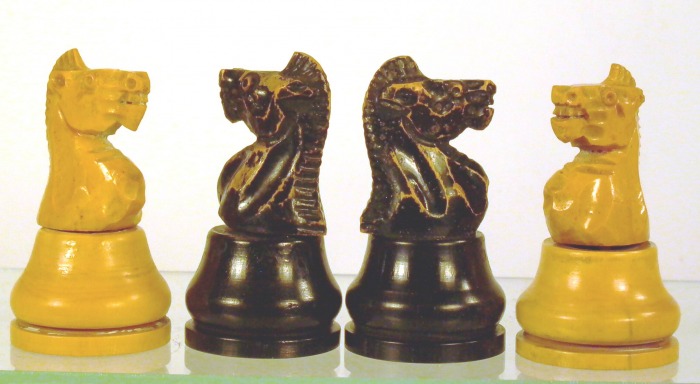
A similar set with two piece knights - which are made in some kind of composite material - papier maché? Kings stand 116 mm, maker is unknown.
|
  |
Collarfull
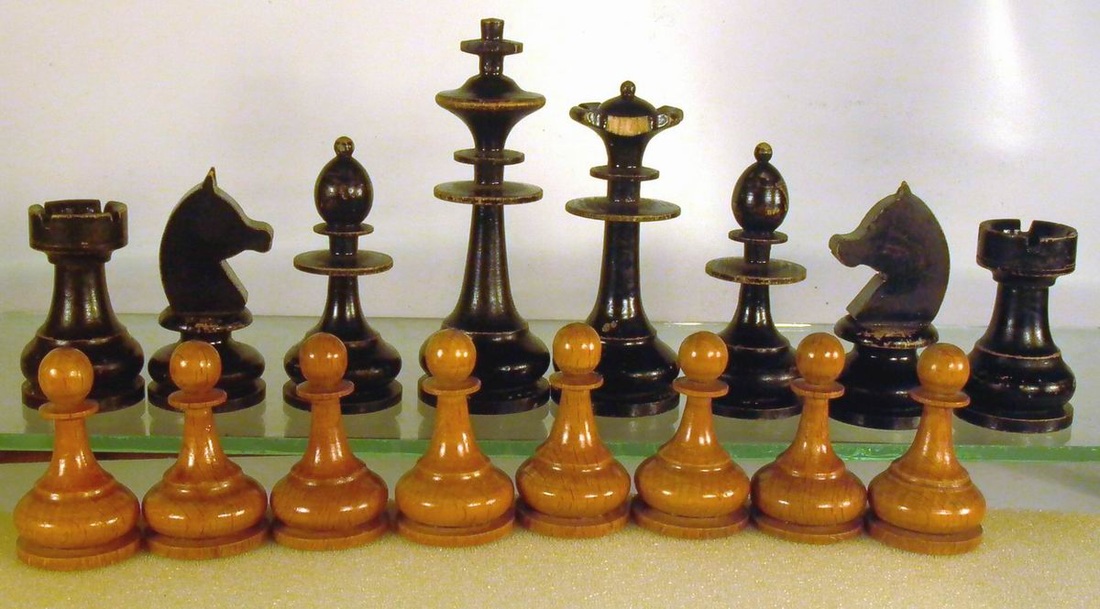
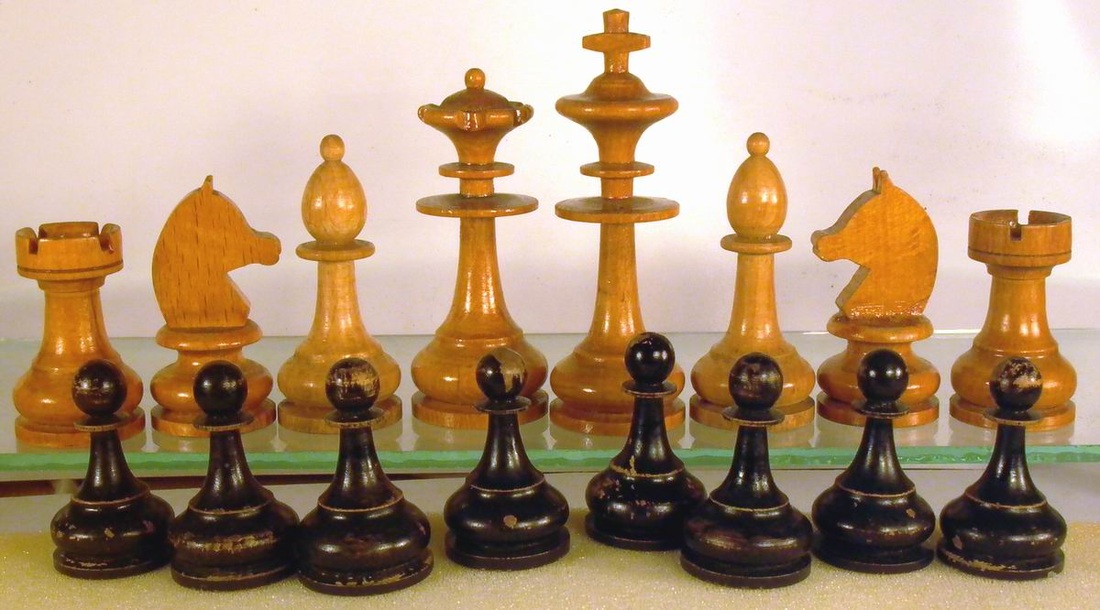
Notable staunton set form around 1900 or later - with kings at 90 mm. Note the wide and flat tops of kings and queens, the the large collars on kings, queens and bishops (the white bishops are later replacements), and the bulbous bases. Came in a box marked "Zur Erinnerung an die Gefangenschaft Krasnoyarsk 1915" - which would make it pre-WWI.
|
 |
GDR Set

Varnished chess pieces from the days of the former GDR - with a plastic head to the two-pieces knights, almost undistinguishable. Kings stand 76 mm |
 |
BK playing set
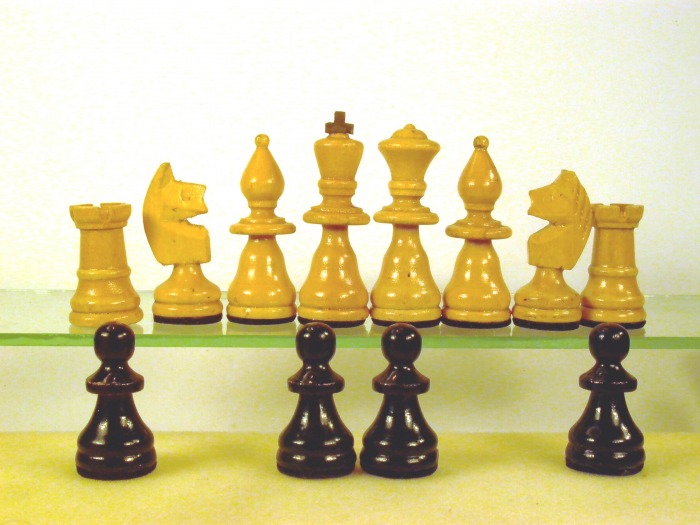
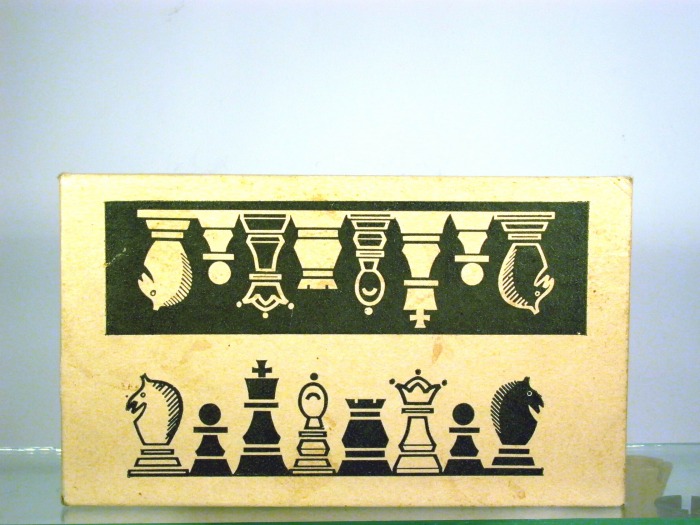
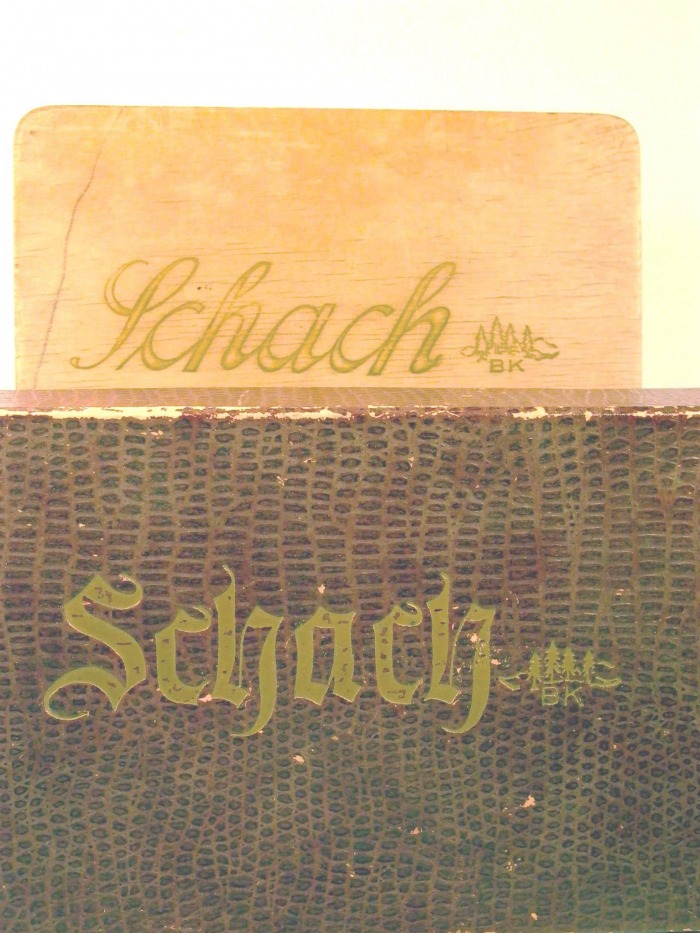
Well finished sets (2 of them), king 65 mm, crosses metal /wood stuck into aperture!, king height 65 mm, felted - from between 1940 and 1960. |
 |
Bohemia
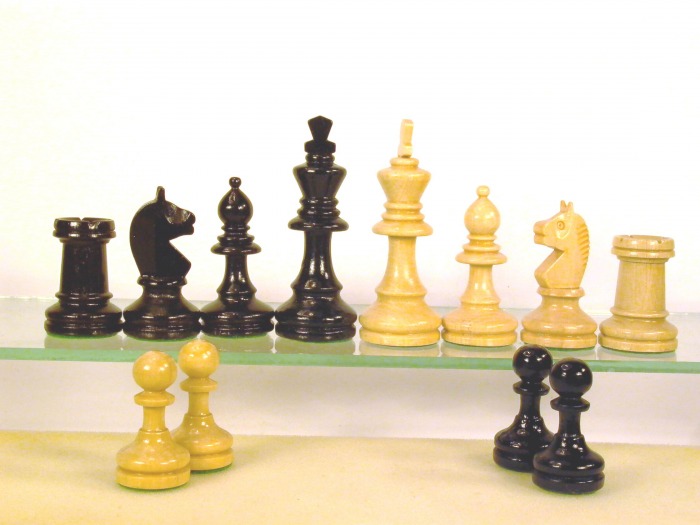
Bohemia pieces in a false leather box, with A.v.Rolland logo, ca. 1970, weighted and felted. Notably the "chicken" head on knight - the sets in larger size at one time were the standard equipment in the German Bundesliga - kings 72 mm. |
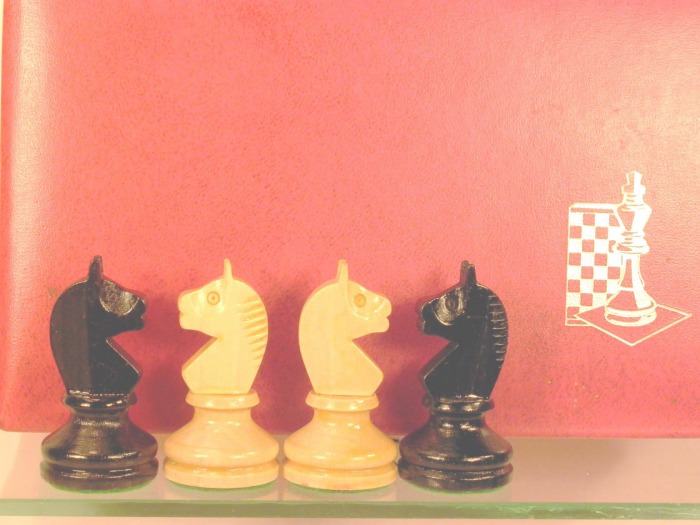 |
Glass-eyed Chessmen

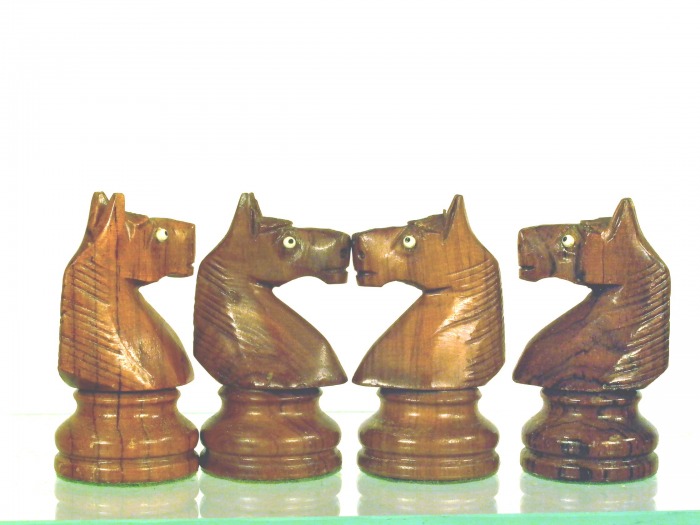
Chessmen in natural and brown exotic wood - with small eyes- actually ceramic. the light queen is from a different large-pored wood, stands out sharply! Kings 70 mm high |
 |
Larger glass-eyed set
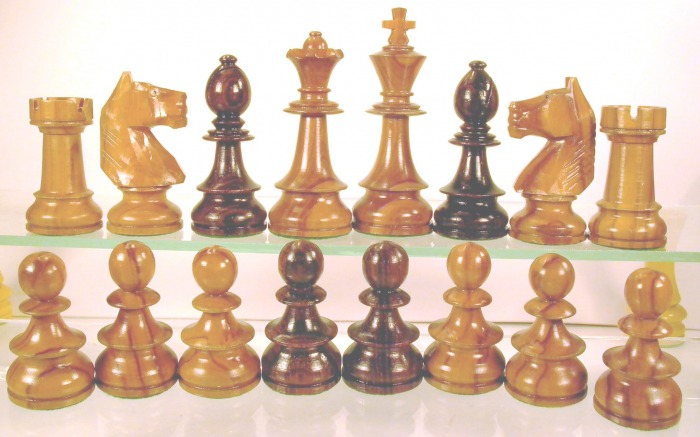
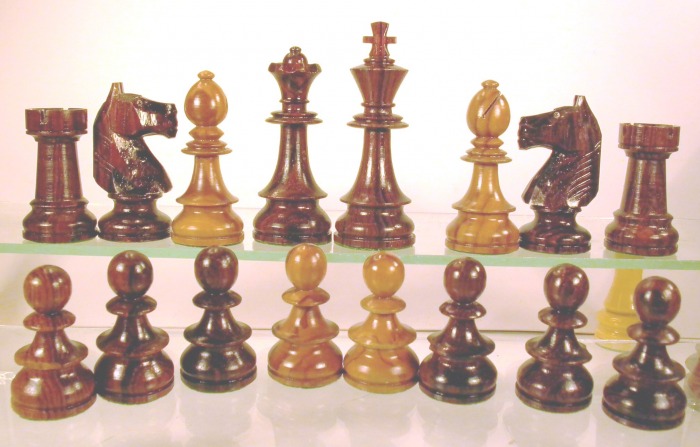
Tournament size (king 87 mm), this set from plaissander or the like is much better finished - and weighted. Knights eyes are actually opaque ceramics. Natural wood colours - chessmen are made from tropical wood - teak and palissander.. |
 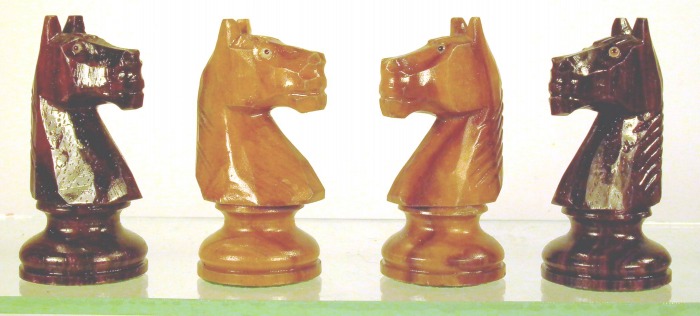 |
French Staunton
Slim Stem chessmen
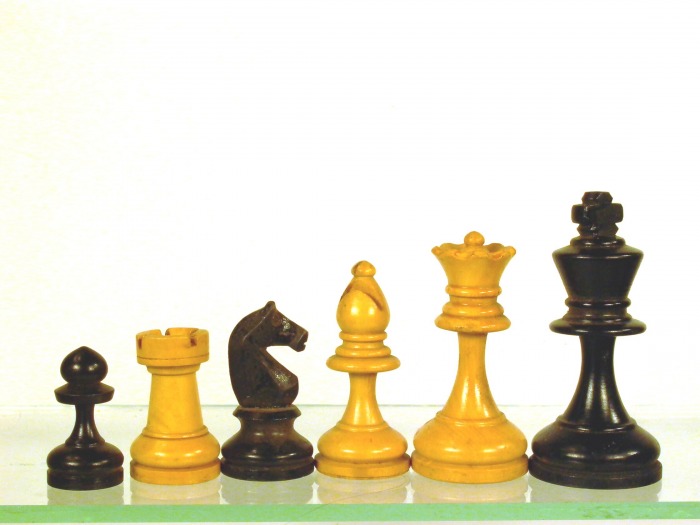
At 64 and 67 mm kings height, one set is much more substantial than the other. Probably Chavet or Roz as makers. Felted. |
 |
Tall Boxwood set
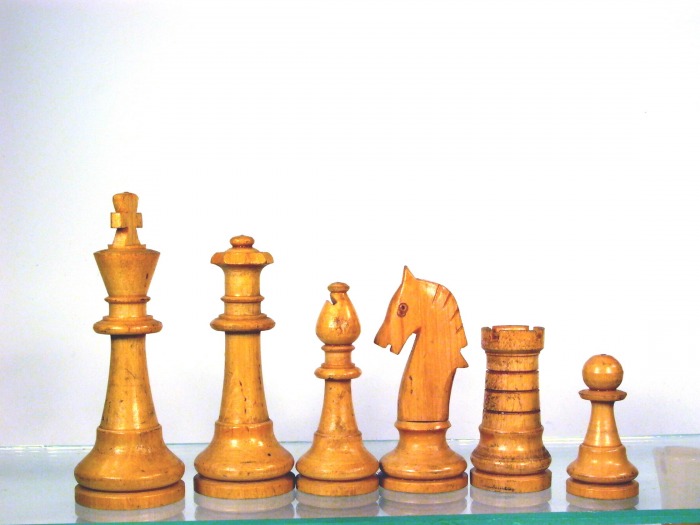
Stylized knight head, no felt (prewar) - king 87 mm - simple and out of the ordinary.
Dogface knights

Very common set - in all sizes - knights head same as in common Regency sets - king 72 mm - certainly older, a good 50 years. |
Tête simple.....
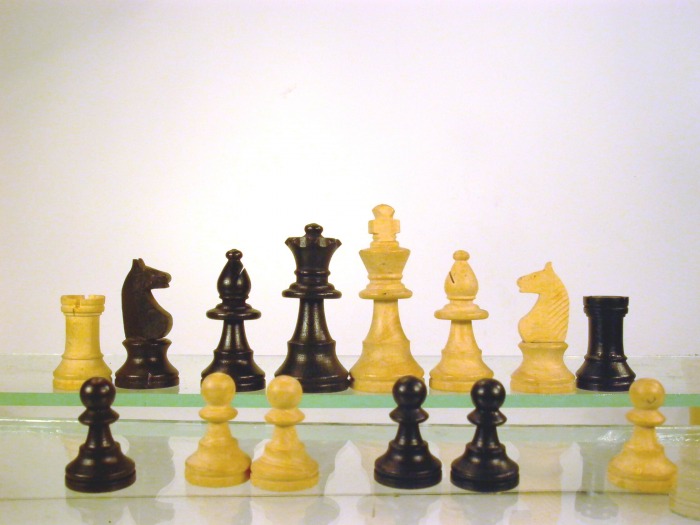
The simplest of all french desin«gns - boxwood, kings at 56 mm - from the 50ies. Very common - one bishops lacks the cut! |
Russian (Soviet Union)
Russian Ruins

Rest of a 1\920ies Russian playing set - unfortunately pretty much what is left. king stand 90 mm, pieces have rests of old felting, no weight. It might be the ruins of a Soviet playng set, though....
Russian Staunton
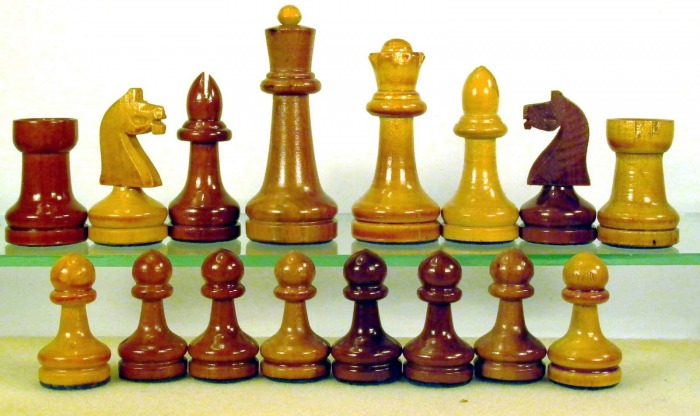
Russian standard Staunton set from the - 60ies? - with interesting features. Kings are not the same height (82mm / 81 mm), second , they must have been handvarnished by somebody with a sloppy brush - brown has slopped over onto the light pieces, some pieces are difficult to ascribe to either side (see center pawn). Third , they are weighted and felted - filials are painted.
Recent Playing Set
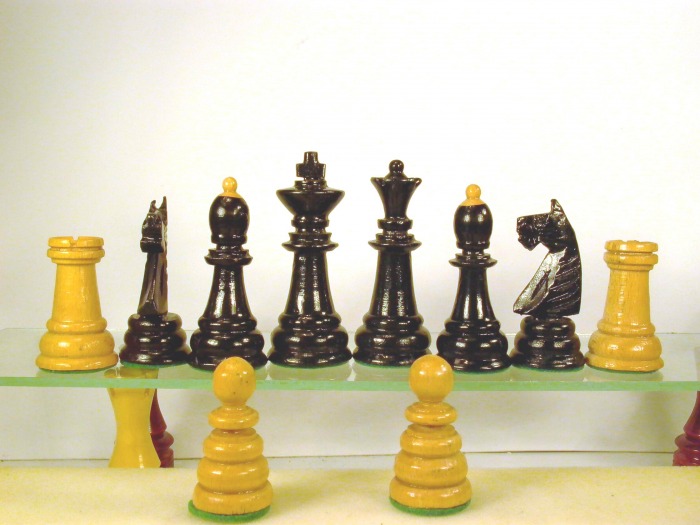
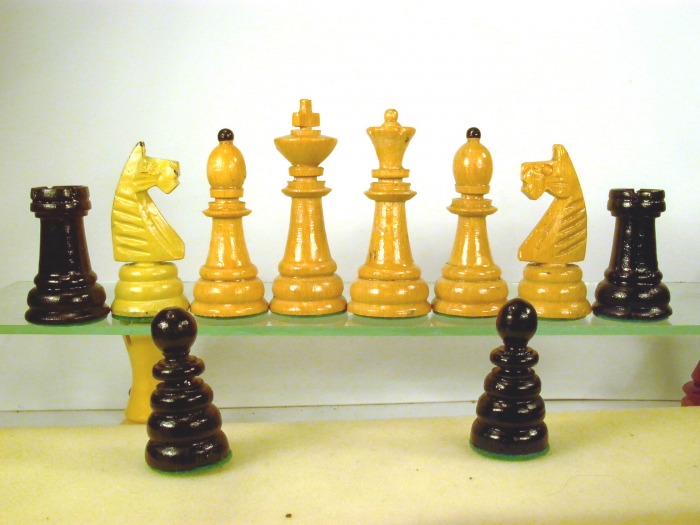
Recent (80ies) playing set, weighted /felted, king at 88 mm, well finished - white knight started out as a black one and then turned his coat out - happens all the while in politics.... Finland
|
 |
Finnish smoothies

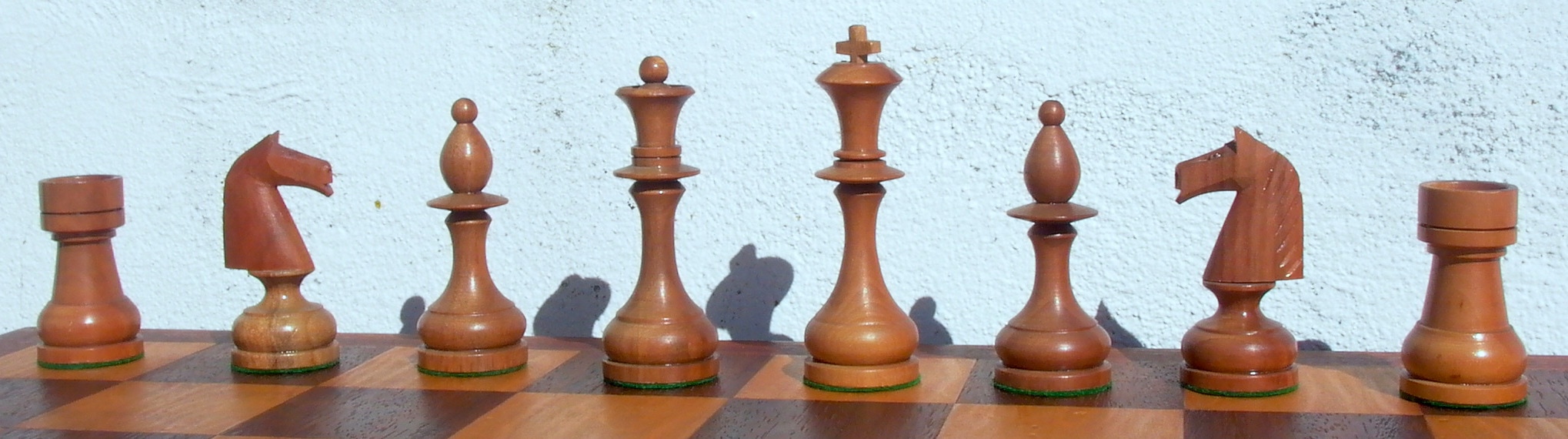
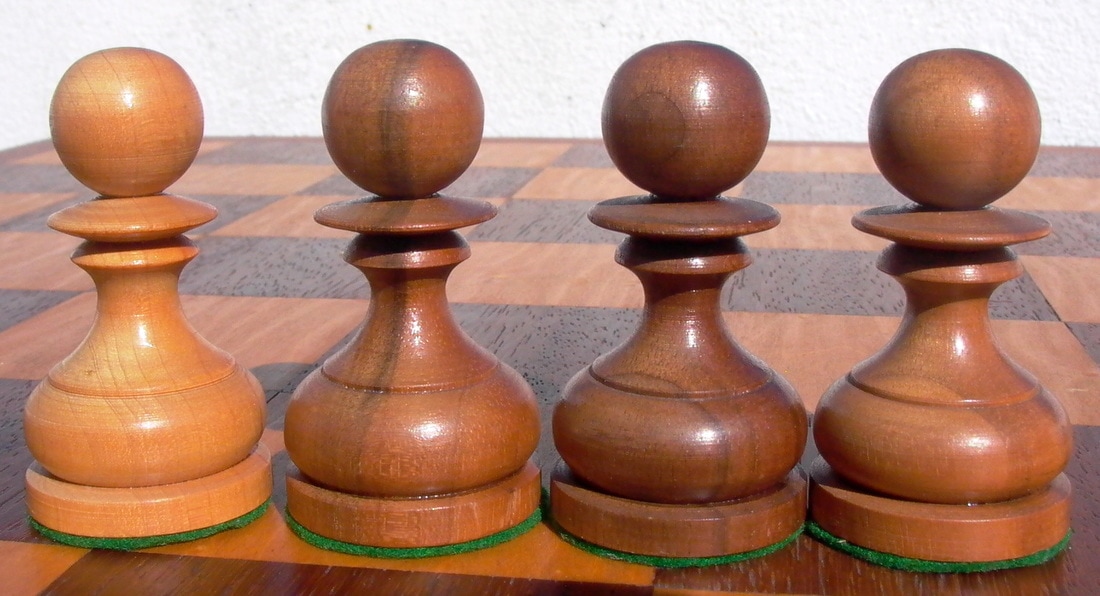
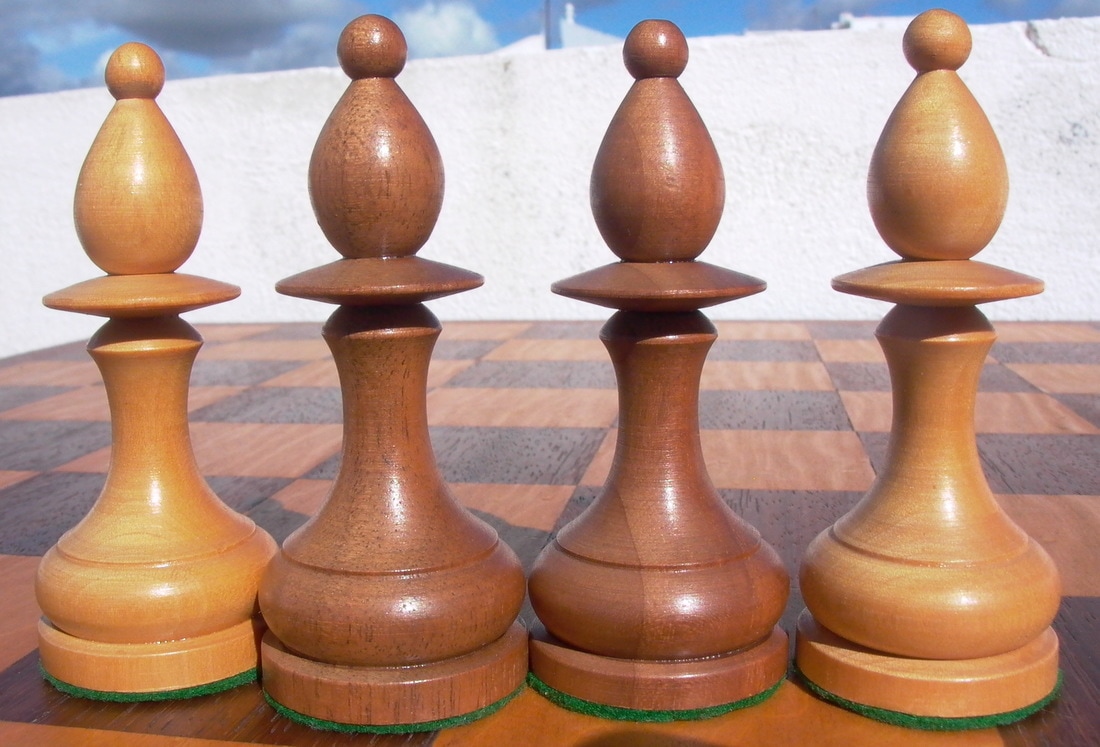

Yugoslavia
"Dubrovnik" set
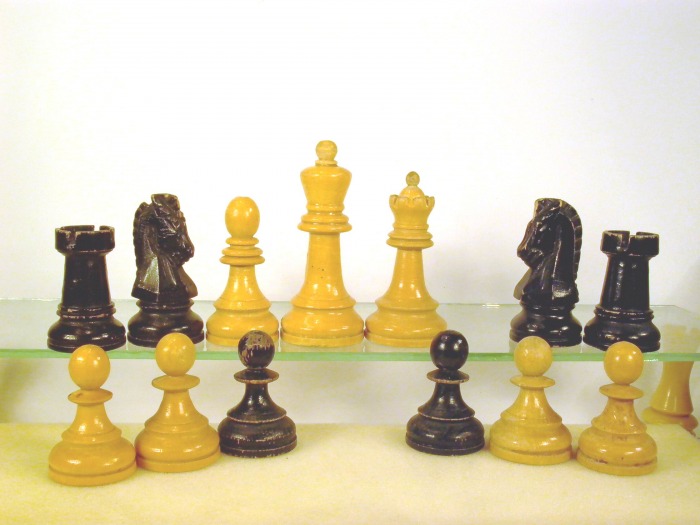
Interesting older set (ca. 1950), with stylized knights - unfortunately incomplete - king stand 87 mm, bishop must have had a spearate opposite-colour finial stuck in, felted. These sets were made in Subotica and were specially designed to serve during the 1950 Dubrovnik Chess Olympiad. 40 years later, for the Novisad Olympics, the factory did it again, and presented the so-named "Novisad" chess set.
Austria
Nekvasil Staunton
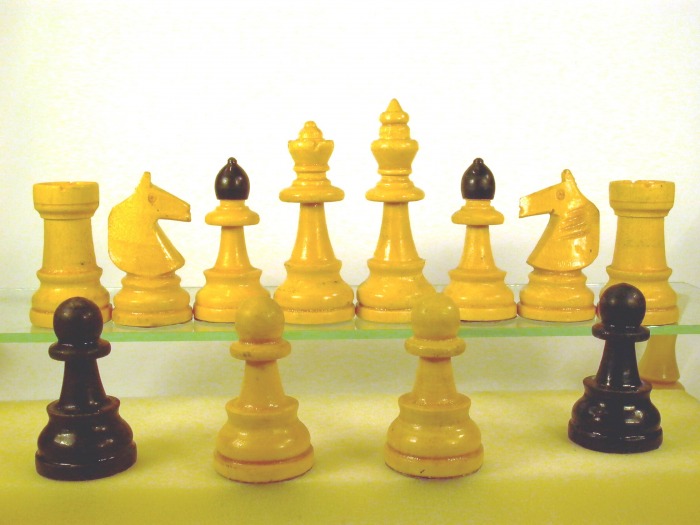
Very rough coffeehouse set, Vienna 50ies - 80ies, king 89 mm, pinewood, unweighted, oil paper pads. The tradtional Austrian/ East Europe opposite colouring of bishop tops is maintained - uncut finial on kings, useful for exporting to Muslim countries, or in multicultural ambientes! |
 |
Nekvasil Staunton-Club format

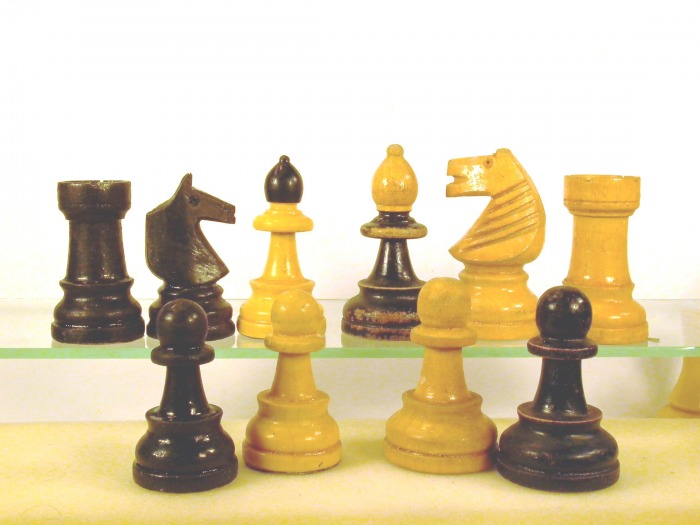
Coffeehouse set - large version - with queen and Kings from Old Austrian Set. Such mixups were not uncommon in club and coffeehouse routine. King size 110 mm - compare the minor pieces between this and the smaller format |
 |
Hungary
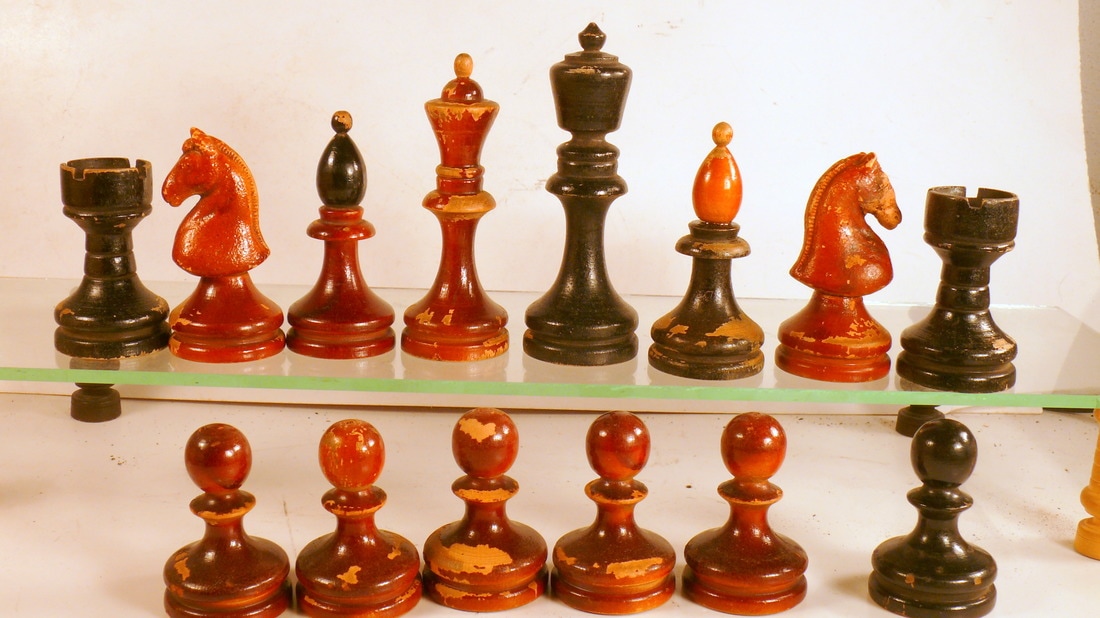
Hungarian Staunton ?

Indonesia
Tournament Set
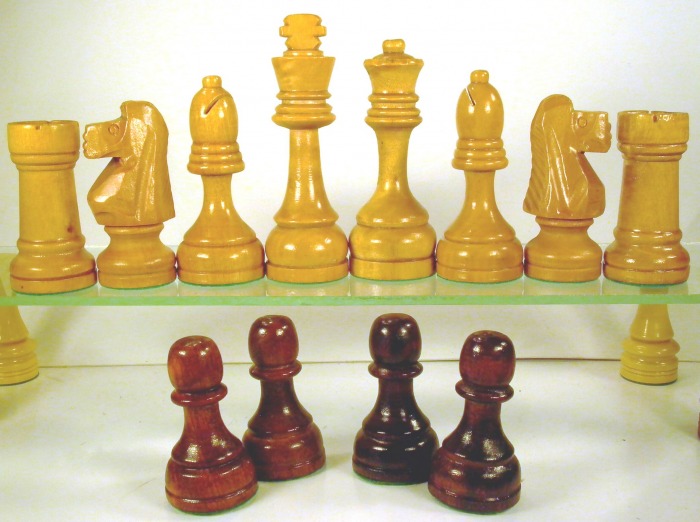
Large playing set (kings 110 mm), most likely from Indonesia, both sides in natural woods, with transparent varnish, felting and no weight. Good simple set from ca. 1970 - onepiece knights! |
 |
Philippines
Tournament pieces
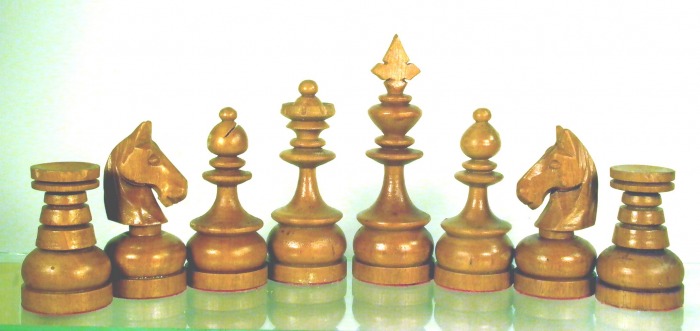
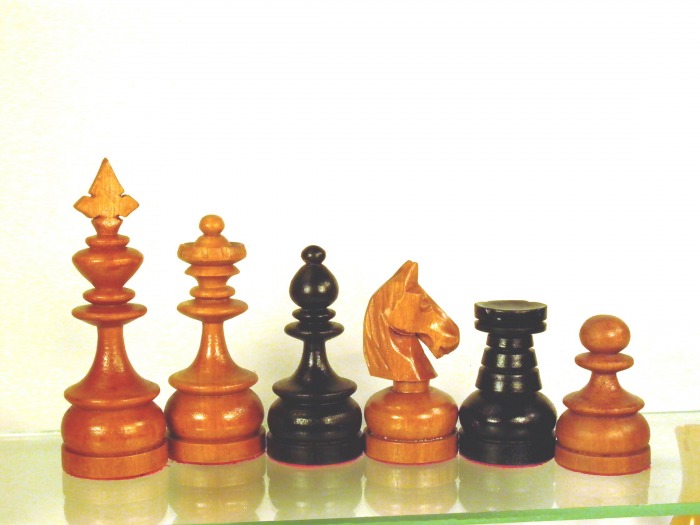
Excellent tournament set in traditional Filipino style, dark side in a local hardwood similar to tiger ebony, lighter side in teak like wood. Kings stand 103 mm - pieces are felted - weighting is superfluous in these authentic sets, as the wood is very heavy, and the bottom bulge gives excellent stability. Nice steeple as well - these sets are not rare, but older sets like this one are better finished. |
 |
Huge Chessmen
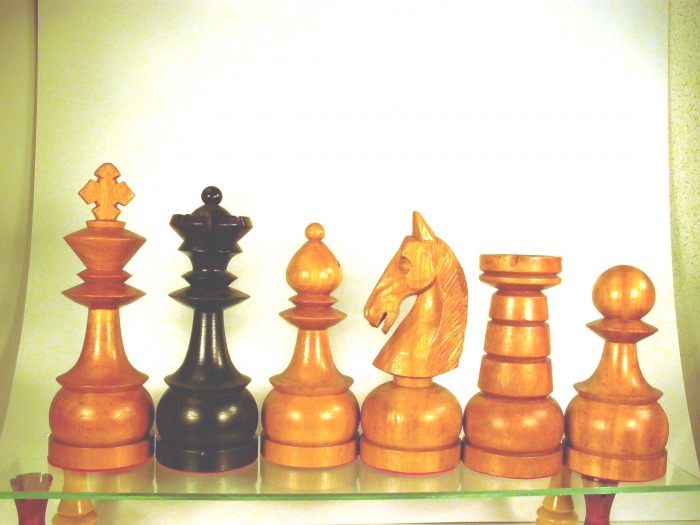
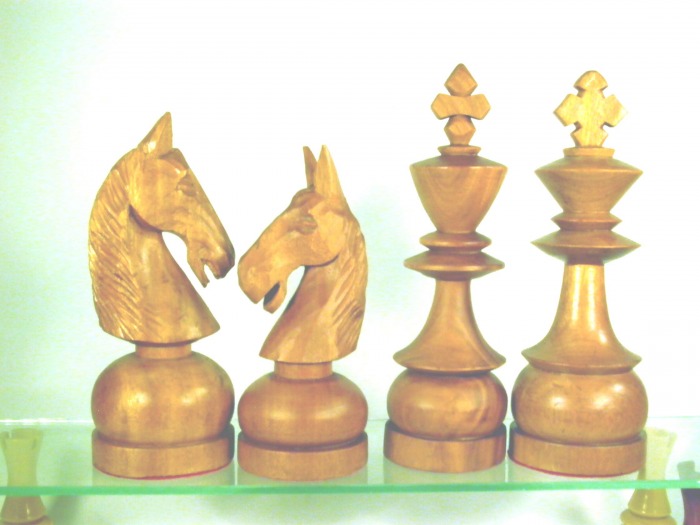
As most Staunton sets, these were/are made in several sizes - this is probably the largest size, with kings at 174 mm (7 "). Pieces this large are easier to move on the floor, or on a lowslung table between armchairs - in any case the set arrived with a neatly sewn black and red wool board! This set is probably from the 50ies - compare with a second set of the same size - check which one is more attractive or better made! |
 |
USA
Cambridge Springs
|
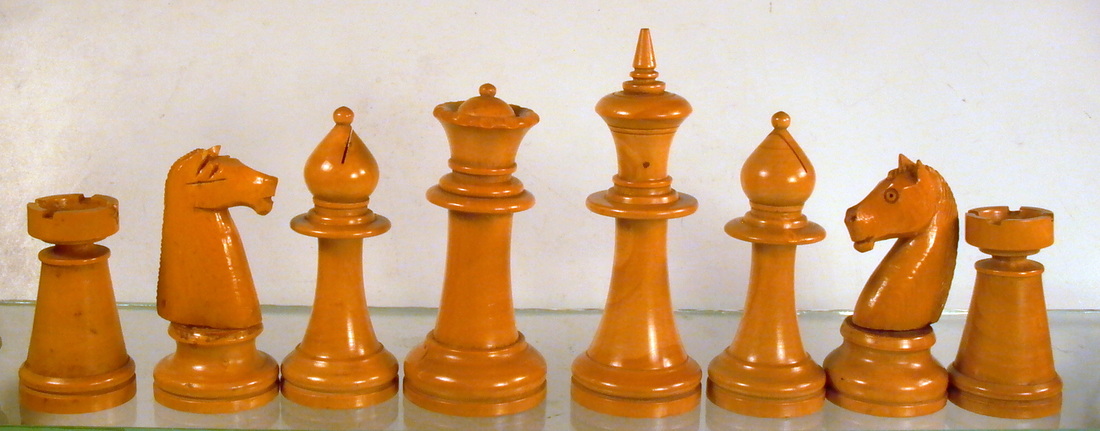
These pieces with spire-topped kings seem to have been a standard US form of Staunton chess men around 1900 and later - similar pieces were used in the chess tournament in Cambridge Springs/NY in 1904, won by Frank Marshall! This set has 4 "/100 mm kings - yes- the spire tip is filed off! - is made of very good fruitwood, with two replacement pieces. An excellent collection of such sets can be seen on the page of anglo/irish collector Mick Deasey. Another very good set is shown by Guy Lyons. Check also the smaller version below!
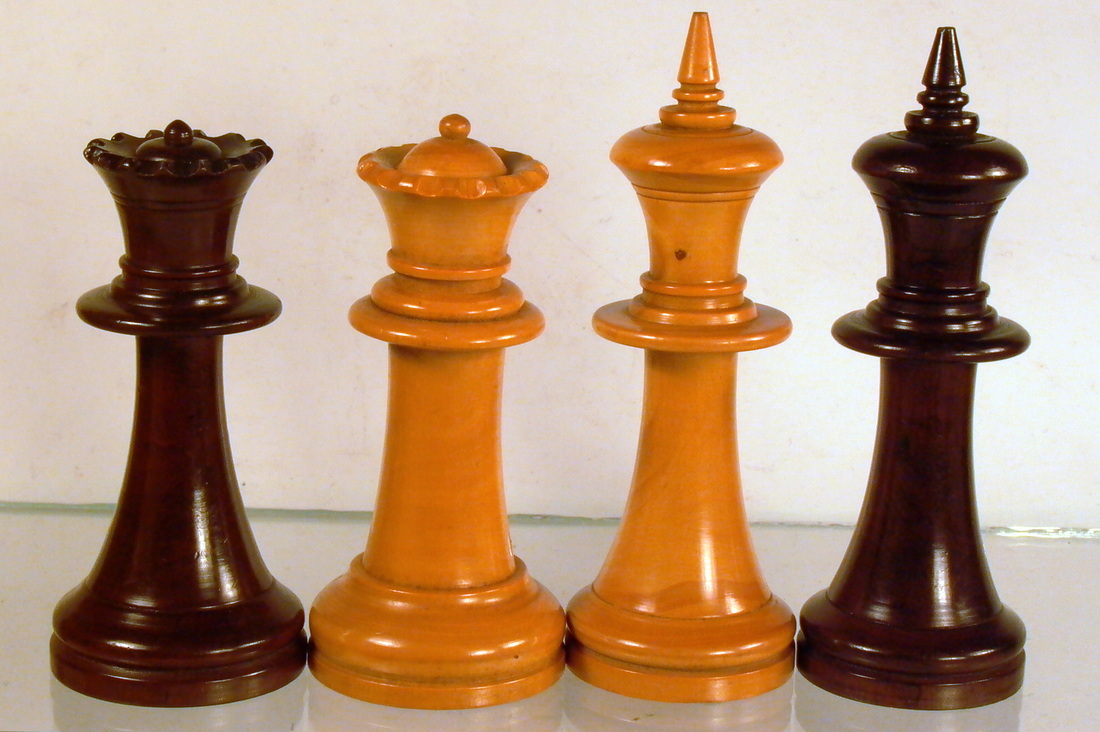
white queen is replaced
|

one white knight replaced...
|
"Lowe" chessmen
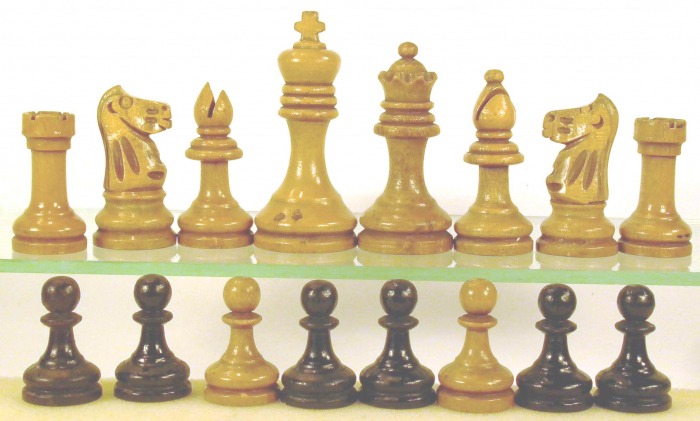
Compact chessmen in hardwood, weighted/felted - as far as I know, commercialized by Lowe in NY - kings stands 70 mm - a tattered leather wrap-around box also contains a folding leather board! |
 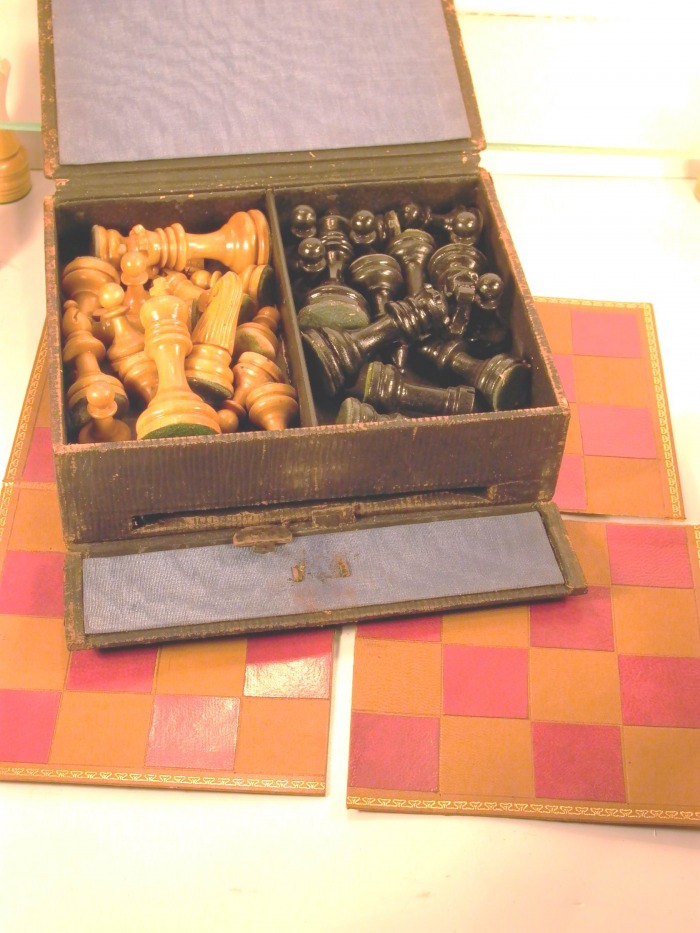 |
Horn chessmen
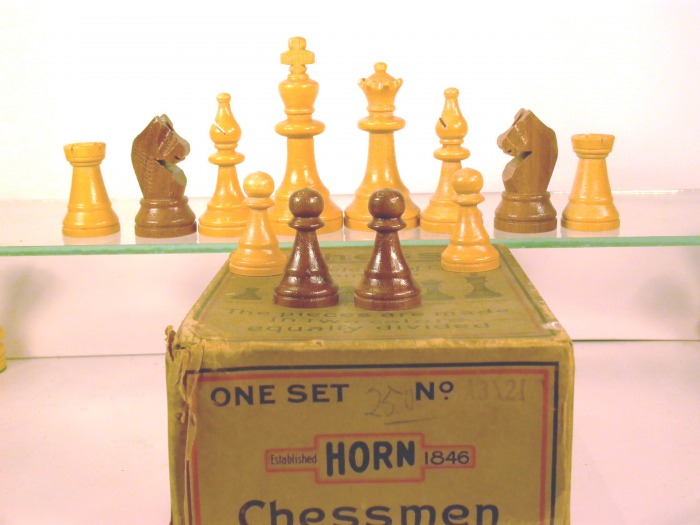
Small hardwood chessmen, king 74 mm, probably around 1910 - 1920. |
 |
Small playing set
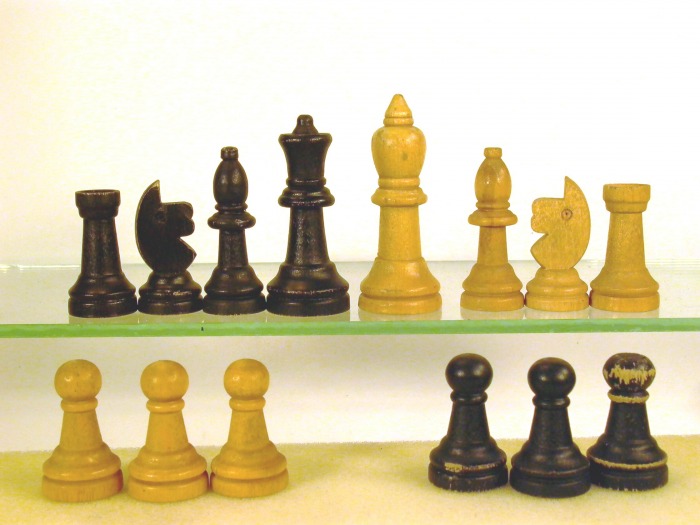
Very modest playing set, hardwood, king stands 69 mm |
Old American
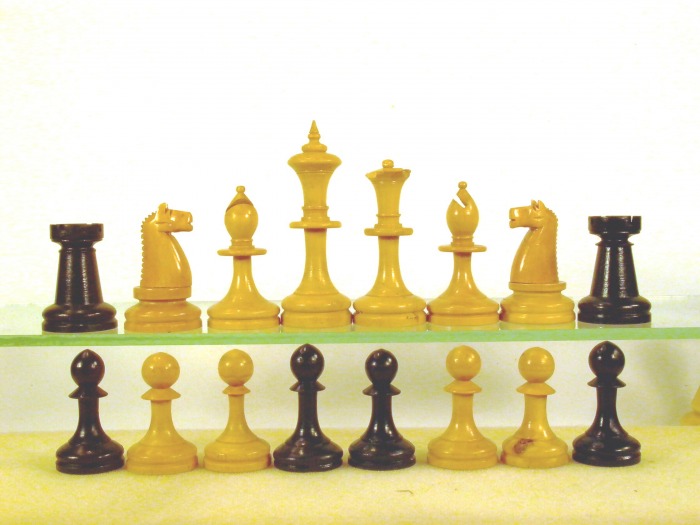
Old and well made boxwood playing set, non-denominational!, with spiretops on kings, very rustic knight, boxwood - king stands 70 mm - the old slide top box that contains them has rest of a sticker of a shop in "Chester, NY". |
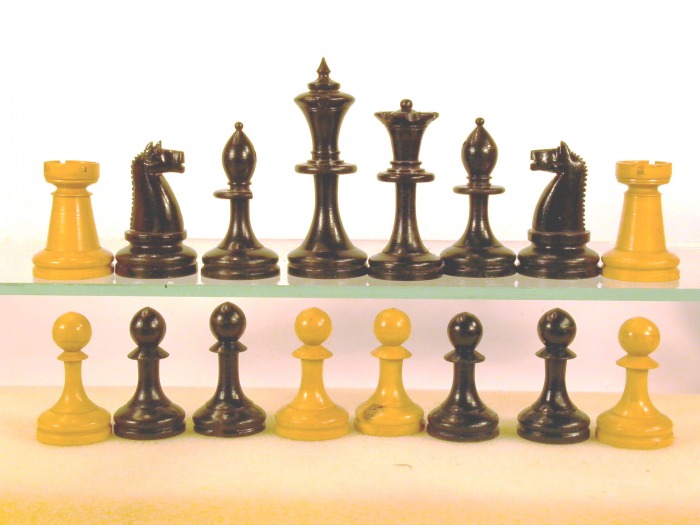 |
